


Alva, Balcazar Vie for Peruvian Interim Presidency in Second Congress Voting
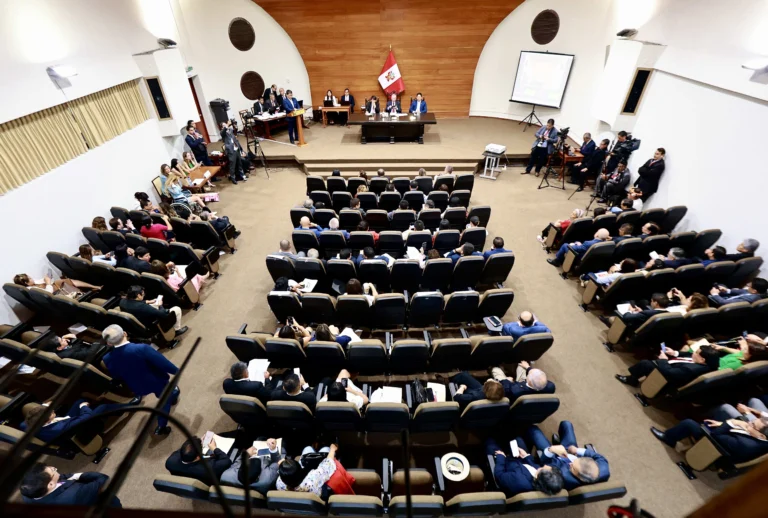
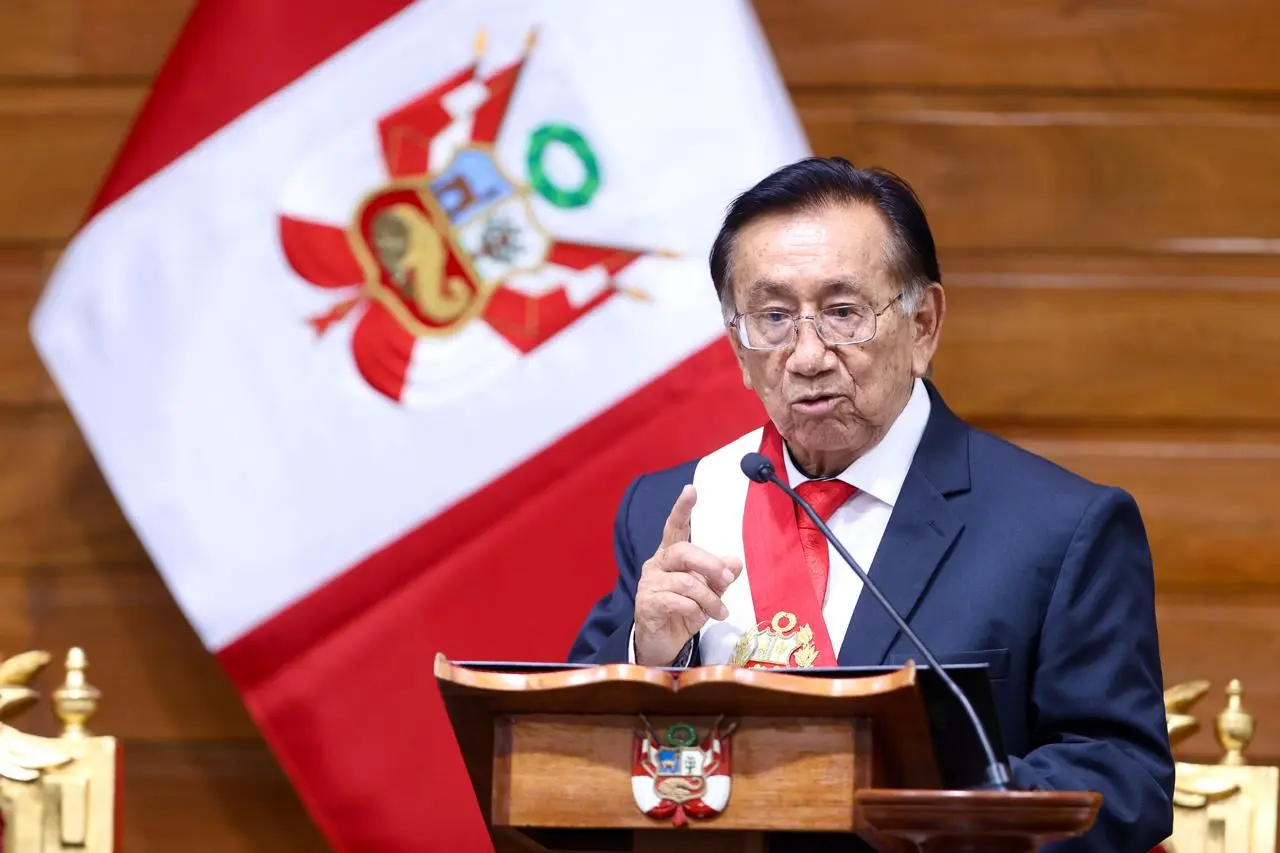
In a surprise vote, left-wing legislator Jose Maria Balcazar of the Free Peru Party won 46 votes from the 117 lawmakers present. Photo: EFE.
February 18, 2026 Hour: 10:45 pm
🔗 Comparte este artículo
Peru’s Congress wil define in a decisive second vote between Maria del Carmen Alva and Jose Maria Balcazar the new Interim President, underscoring the nation’s deep political instability after the dismissal of Jose Jeri.
The Peruvian Congress will hold a second vote to elect its new Interim President, a position that also assumes the provisional head of state, following a session on Wednesday.
The right-wing Maria del Carmen Alva and the centre-left-wing Jose Maria Balcazar emerged as the top contenders, necessitating another round of balloting amid the nation’s ongoing political instability.
RELATED: Peru’s Congress to Choose New Interim President Today Amid Crisis
The vote comes after the Congress dismissed former Interim President Jose Jeri, marking a new chapter in the country’s profound institutional crisis.
The Peruvian Parliament announced via X that “in accordance with the regulatory norm, a second vote will be held between congress members Maria del Carmen Alva Prieto and Jose Maria Balcazar Zelada, candidates from lists 2 and 4, respectively.”
Fernando Rospigliosi, the acting vice-president of Congress and a Fujimorista lawmaker, confirmed that a simple majority would determine the winner between these two candidates.
In a surprising turn during the first round, Jose Maria Balcazar, an 83-year-old leftist legislator from the Free Peru Party (Peru Libre, in Spanish), secured 46 votes from the 117 lawmakers present. Conversely, right-wing congresswoman Maria del Carmen Alva, representing Popular Action Party (Accion Popular, in spanish), received 43 suffrages, despite being widely considered the favorite.
These results positioned both Alva and Balcazar for the decisive second round, which will determine who presides over the Peruvian legislative body and, by extension, the interim presidency.
Other candidates, Hector Acuña (right-wing) and Edgar Reymundo (centre), received 13 and 7 votes respectively, eliminating them from the contention.
The Candidates
Jose Maria Balcazar Zelada, a seasoned legal professional, previously served as a magistrate and was a member of Peru’s Supreme Court of Justice. His entry into Congress as a representative of Free Peru Party connects him to the political movement that brought Pedro Castillo to the Presidency in 2021.
His political affiliation and extensive legal background position him as a significant figure in the current political landscape, particularly in a country grappling with its democratic institutions. His unexpected lead underscores the fragmented and unpredictable nature of Peruvian politics.
Maria del Carmen Alva Prieto, a 58-year-old attorney, previously held the Presidency of Congress from 2021 to 2022. During her prior tenure, she led a robust opposition against Castillo, frequently engaging in public disputes with other parliamentarians.
Alva has also faced controversy due to comments perceived as racist, which garnered significant public criticism.
Her experience and assertive political style characterize her as a prominent figure within the right-wing faction of Peruvian politics, known for its vocal stance against the previous administration.
The Peruvian Congress is conducting this vote to select its next president, who will immediately assume the interim Head of State role, until April 12, when the presidential elections will be held.
The rapid succession of leaders underscores the deep-seated political instability that has plagued the Andean nation for years, reflecting a systemic fragility within its governmental structures. The Peruvian constitutional framework allows for such transitions, which, while legal, often exacerbate public distrust, like the 5% citizen approval that shows this process.
Deepening Institutional Crisis
This current electoral process occurs less than two months before general elections are scheduled. This short transitional period adds urgency to the vote and emphasizes the temporary nature of the forthcoming presidency, further highlighting the country’s precarious political state.
Jose Jeri had assumed the presidency after Dina Boluarte’s vacancy on October 10 last year. With his departure, the country has witnessed seven presidents in less than a decade, with the majority being impeached due to corruption scandals.
This rapid turnover of leadership is a stark indicator of the pervasive institutional crisis that has gripped Peru, eroding public trust in its democratic processes and fostering an environment of continuous political upheaval. The consistent impeachments underline a pattern of governmental instability that appears deeply embedded in the nation’s recent history.
Author: Laura V. Mor
Source: Agencies